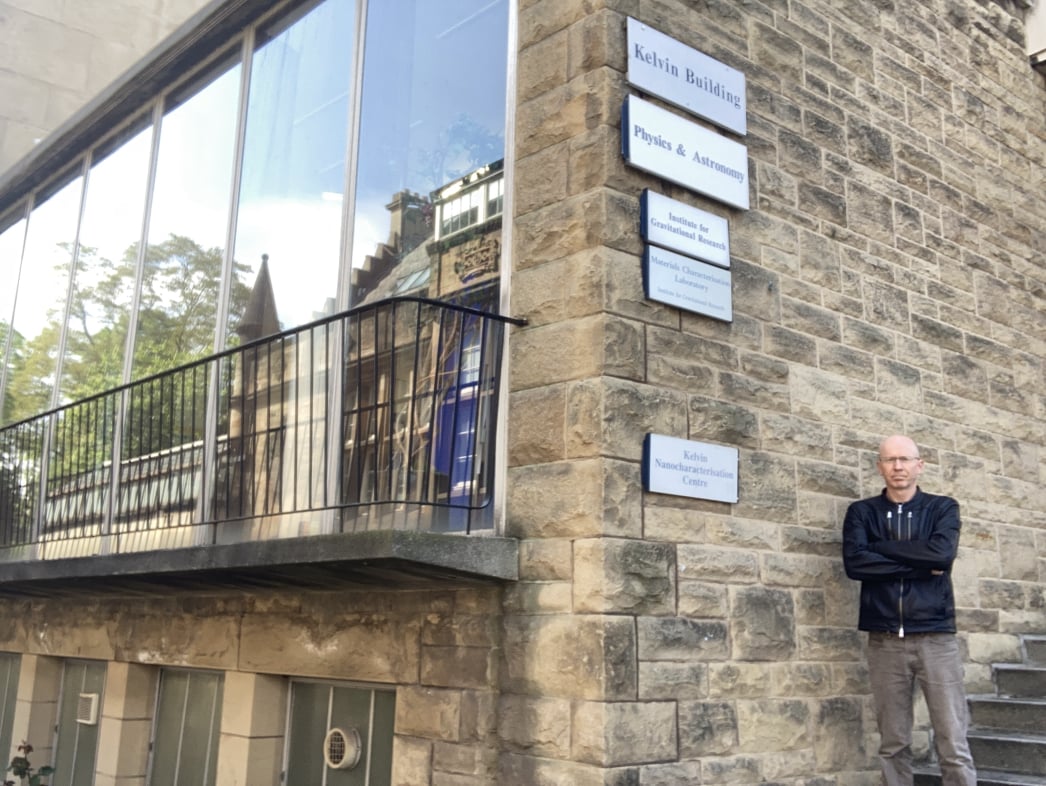
Kelvin Building
Monumental new paintings reimagine Lord Kelvin’s vision of the universe
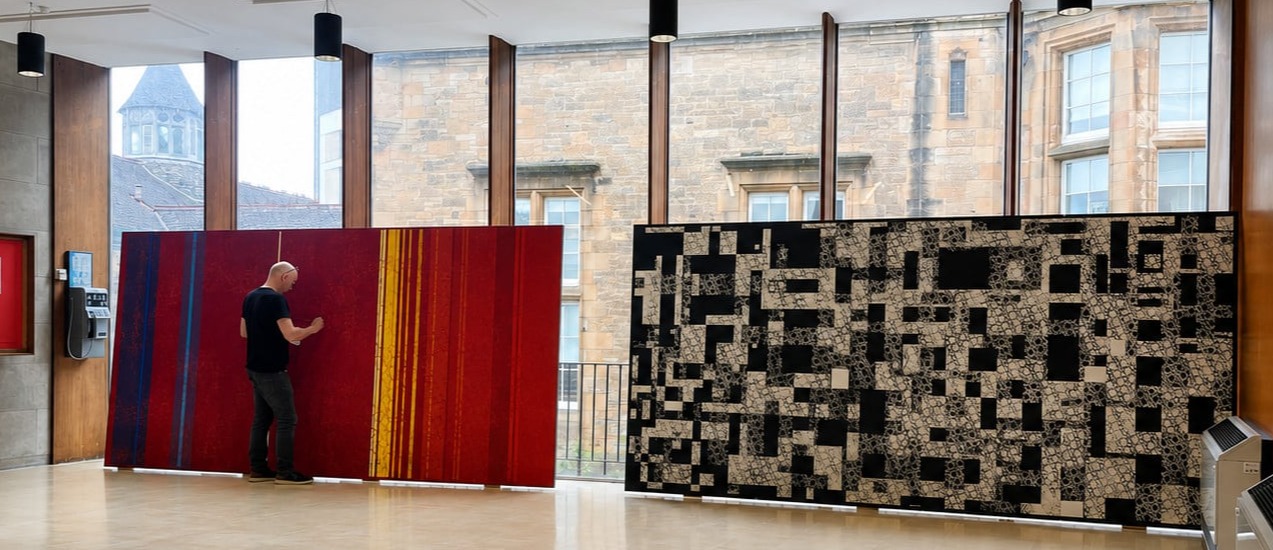
Two vast paintings inspired by one of the most ambitious scientific theories proposed by physicist Lord Kelvin will be unveiled at the University of Glasgow this June.
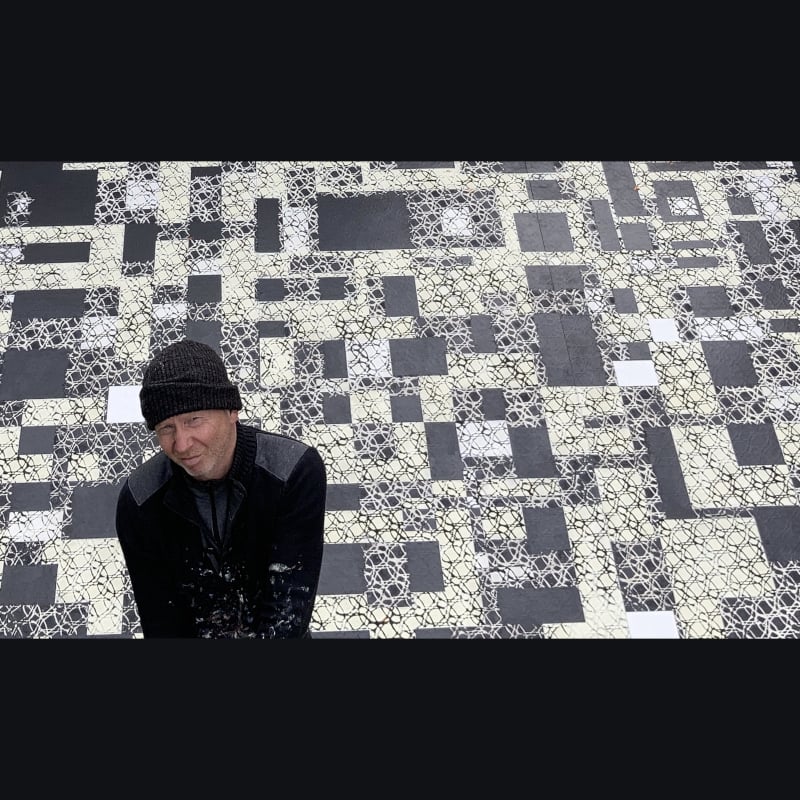
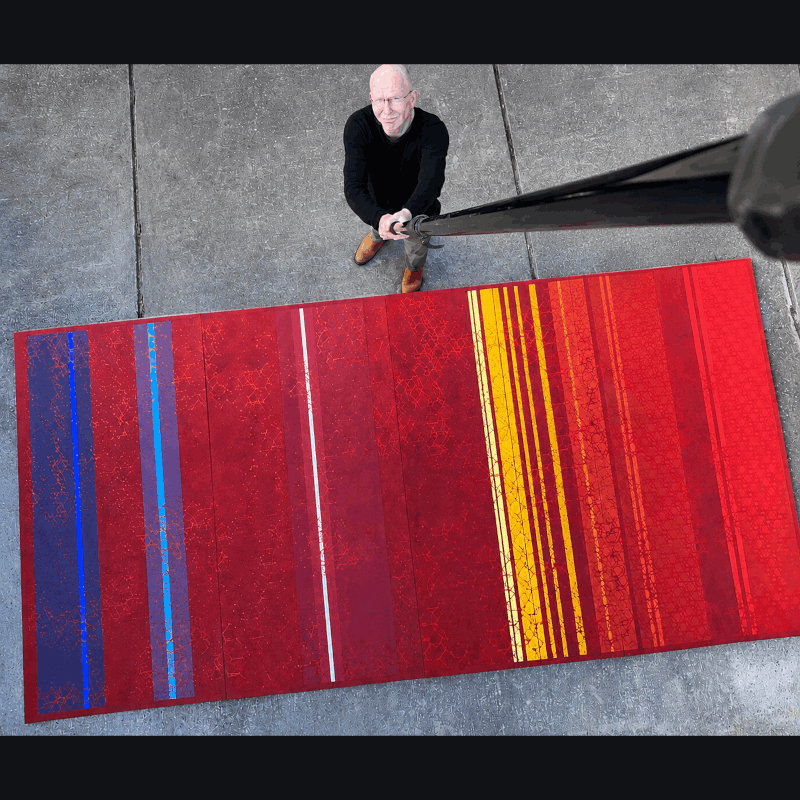
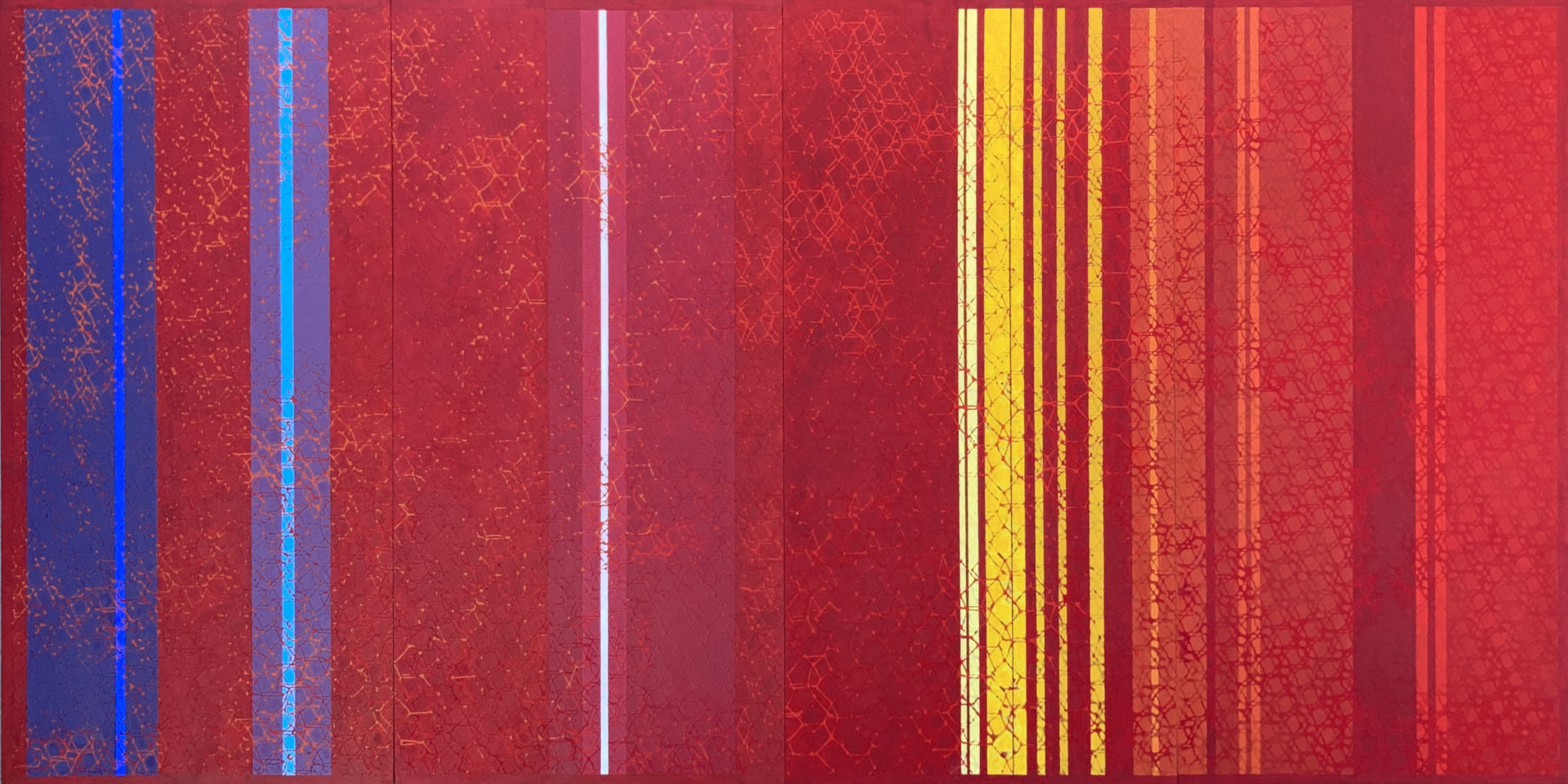
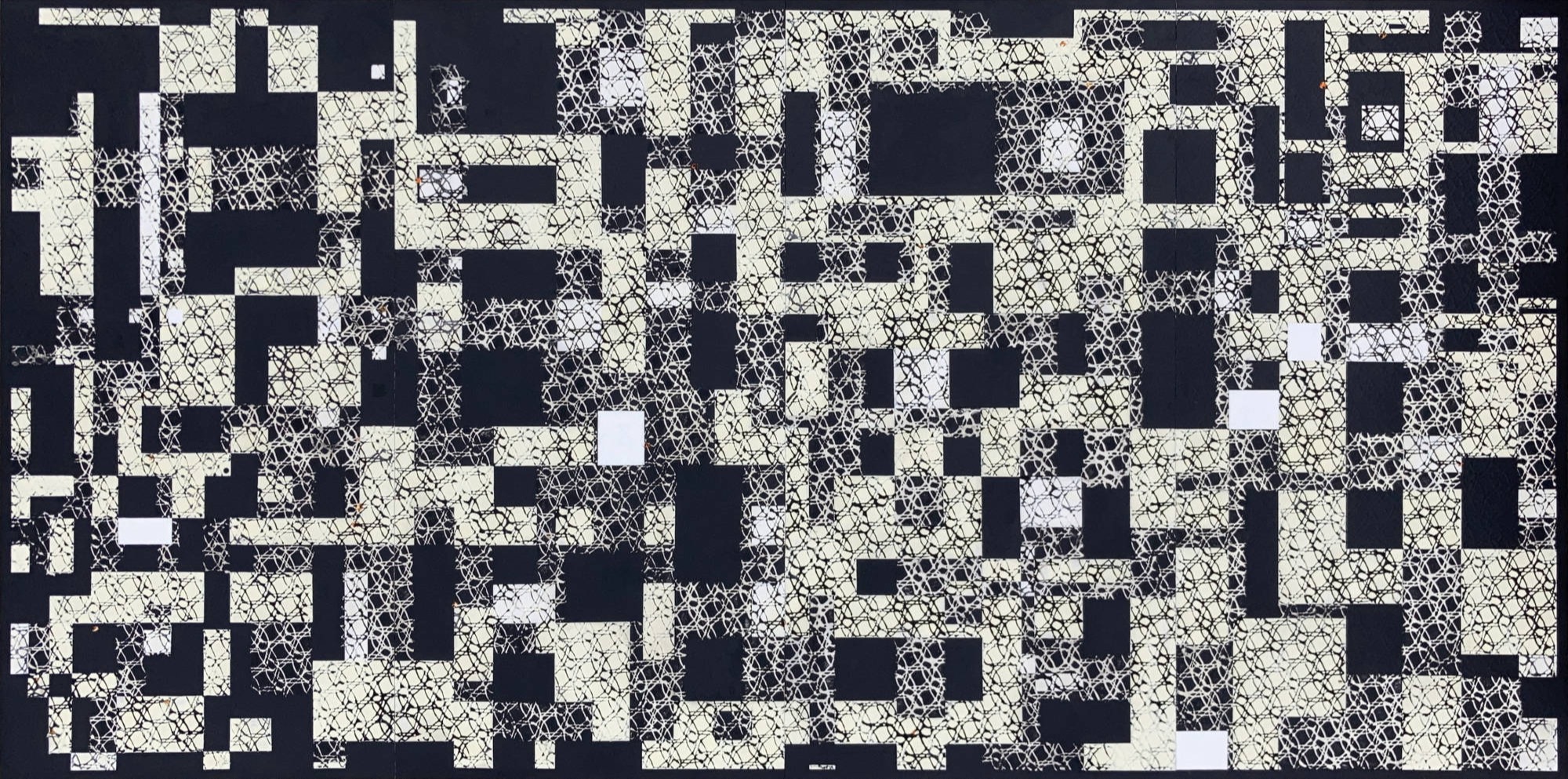
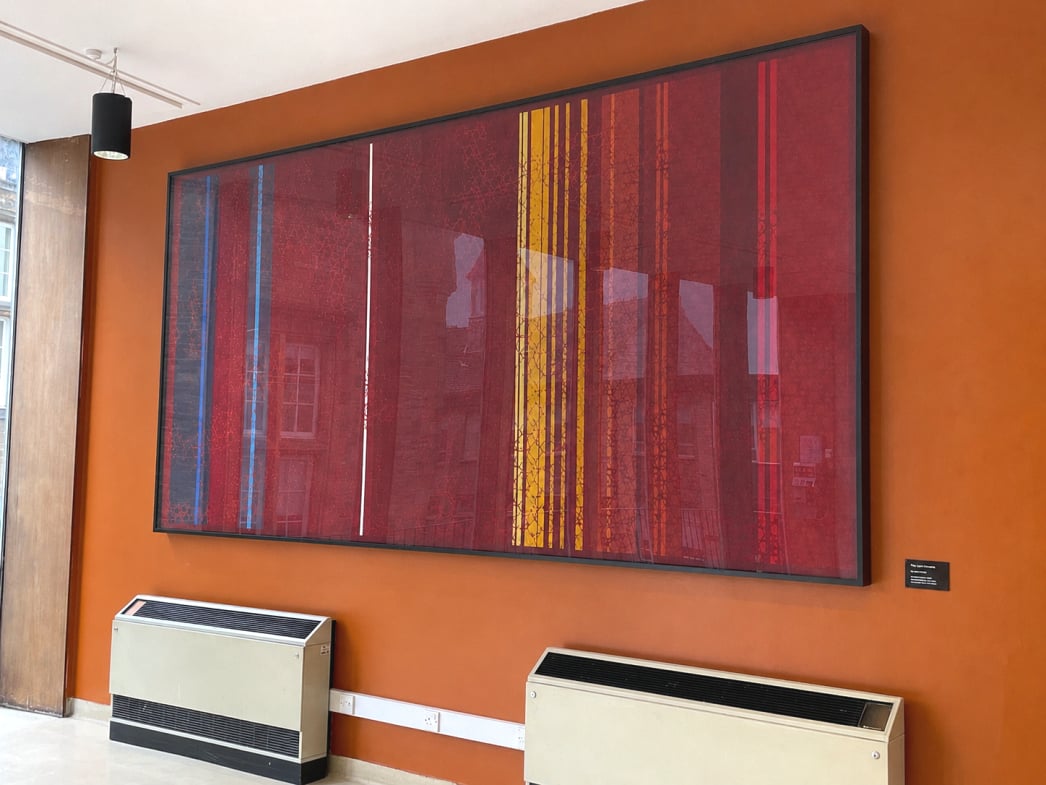
Created by Scottish artist Gregor Harvie, The Light Universe and The Dark Universe will be permanently installed in the newly-refurbished Kelvin Building from 4 June 2026, coinciding with the start of the Glasgow International Festival of Contemporary Art and the Glasgow Science Festival.
The monumental works use artificial intelligence, advanced 3D computer modelling and layered painting techniques to reconstruct Kelvin’s all-pervading ‘ether’, a theory for the structure for the universe.
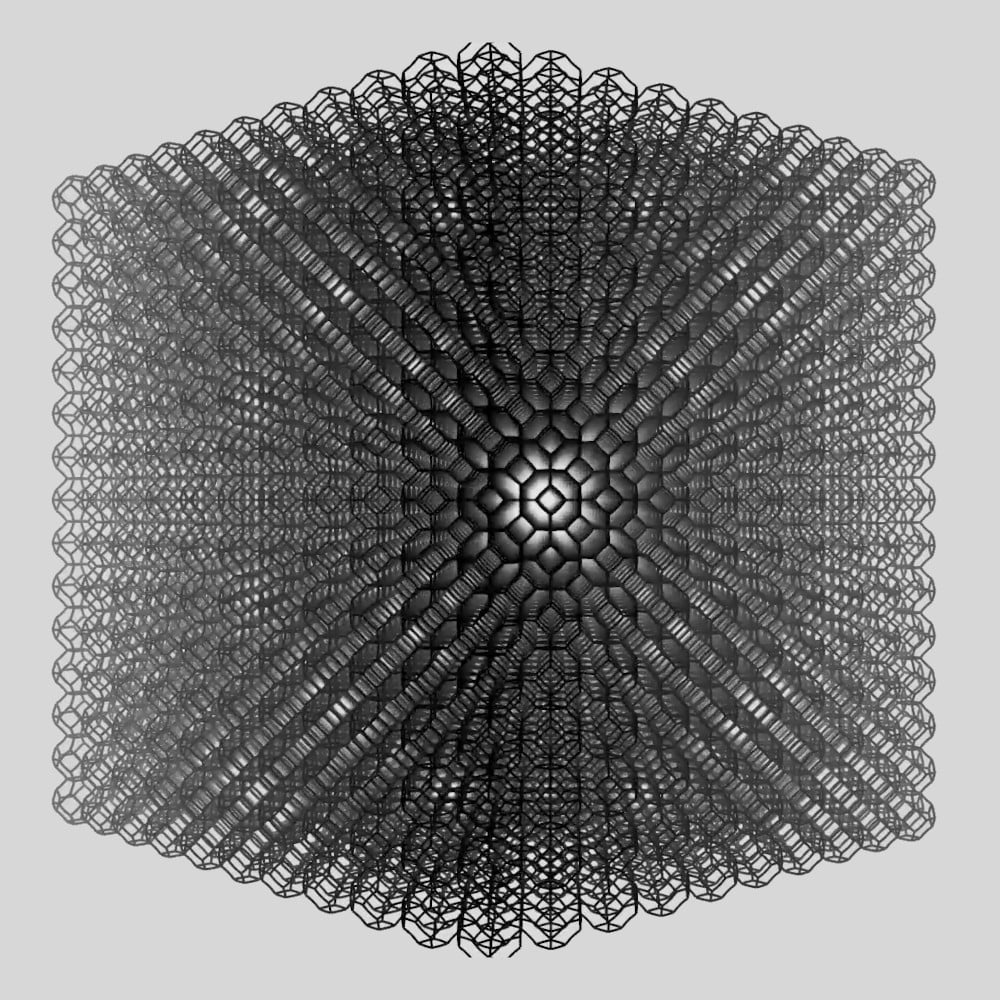
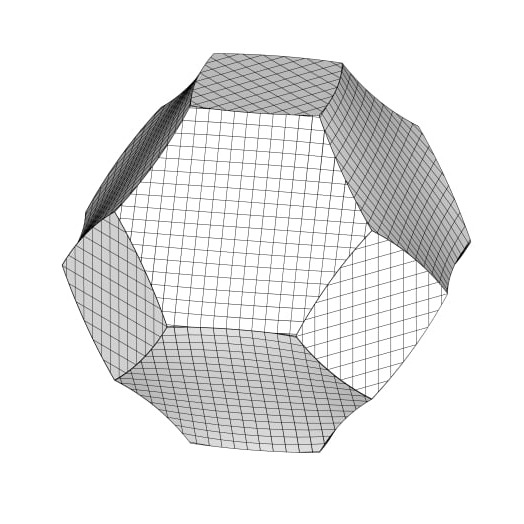
Throughout history, there has been a recurring intuition that “empty space” isn’t empty at all but filled with something continuous. In ancient Greece, the primordial god “Aether” was a divine substance filling the heavens. In Victorian times, the idea of an ether was used to explain how light could travel through a vacuum, and in 1887, Glasgow’s Lord Kelvin proposed the Kelvin Cell as the most efficient possible solution.
Working with researchers from Glasgow University’s Quantum Theory Group, artist Gregor Harvie has digitally recreated thousands of interconnected Kelvin Cells to form a complex lattice that is the basis of his two paintings.
The Light Universe is a luminous field of flowing colour and energy representing the visible, measurable cosmos. The Dark Universe is more unsettling, a fragmented monochrome patchwork inspired by dark matter and dark energy, which together are believed to make up 95 per cent of the universe, but are largely unexplained.

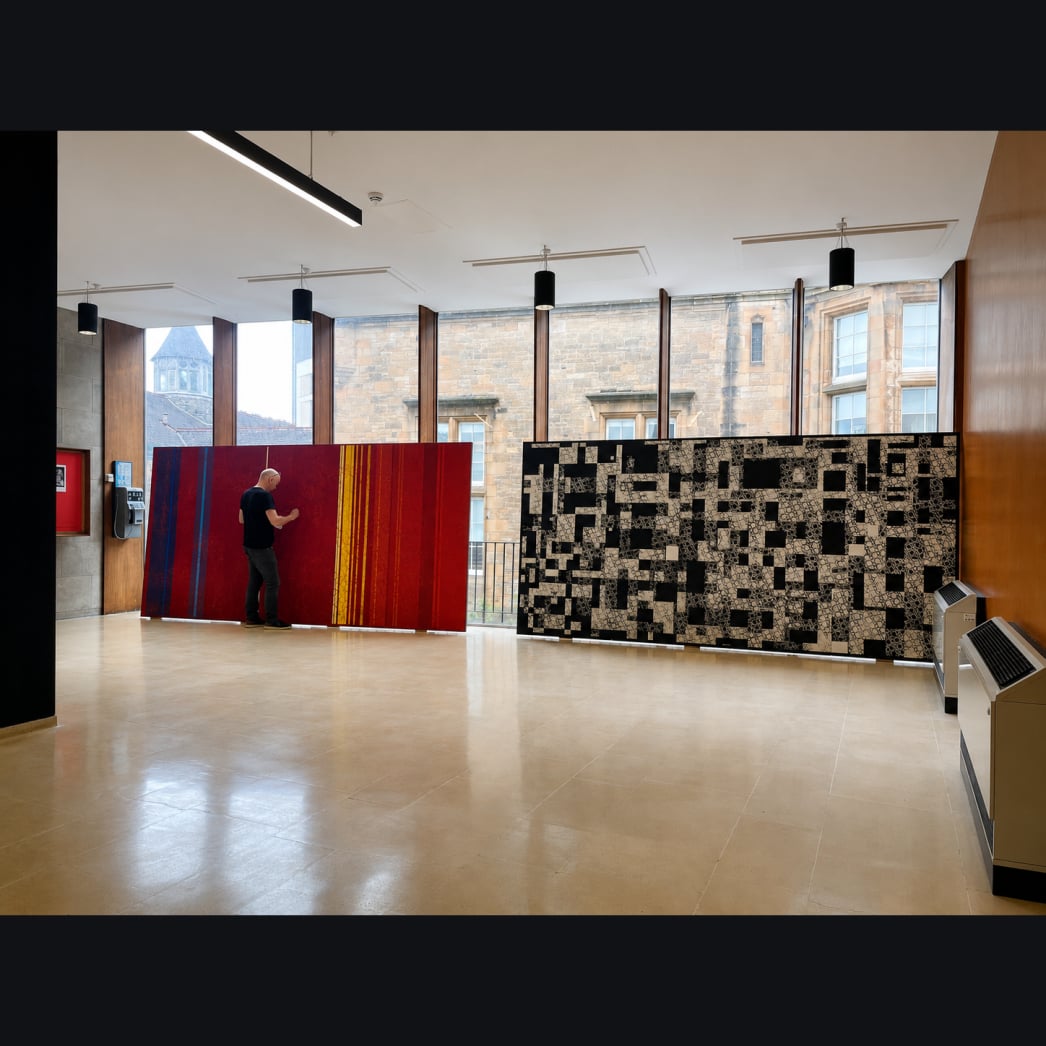
Installation process