Uncertainty is a fundamental part of life. We cannot know everything.
The infinite interactions that happen continually throughout the universe will never be fully knowable. When physicists started studying the molecular behaviour of gases, they realised they couldn’t analyse them at the level of individual particles because there were just too many. There are 2.7×10^19 hydrogen molecules in just 1cm³. All they could do was look at the probabilities that particles would behave in different ways, and this approach gave birth to quantum physics – a physics based on uncertainty.
Quantum physics also tells us there are things we cannot know simultaneously, such as the momentum and position of a particle; it will never be possible to know them both accurately at the same time. Uncertainty is not a limitation of human capacity, or technology, it is not a gap in knowledge, it is a fundamental part of the way reality operates.
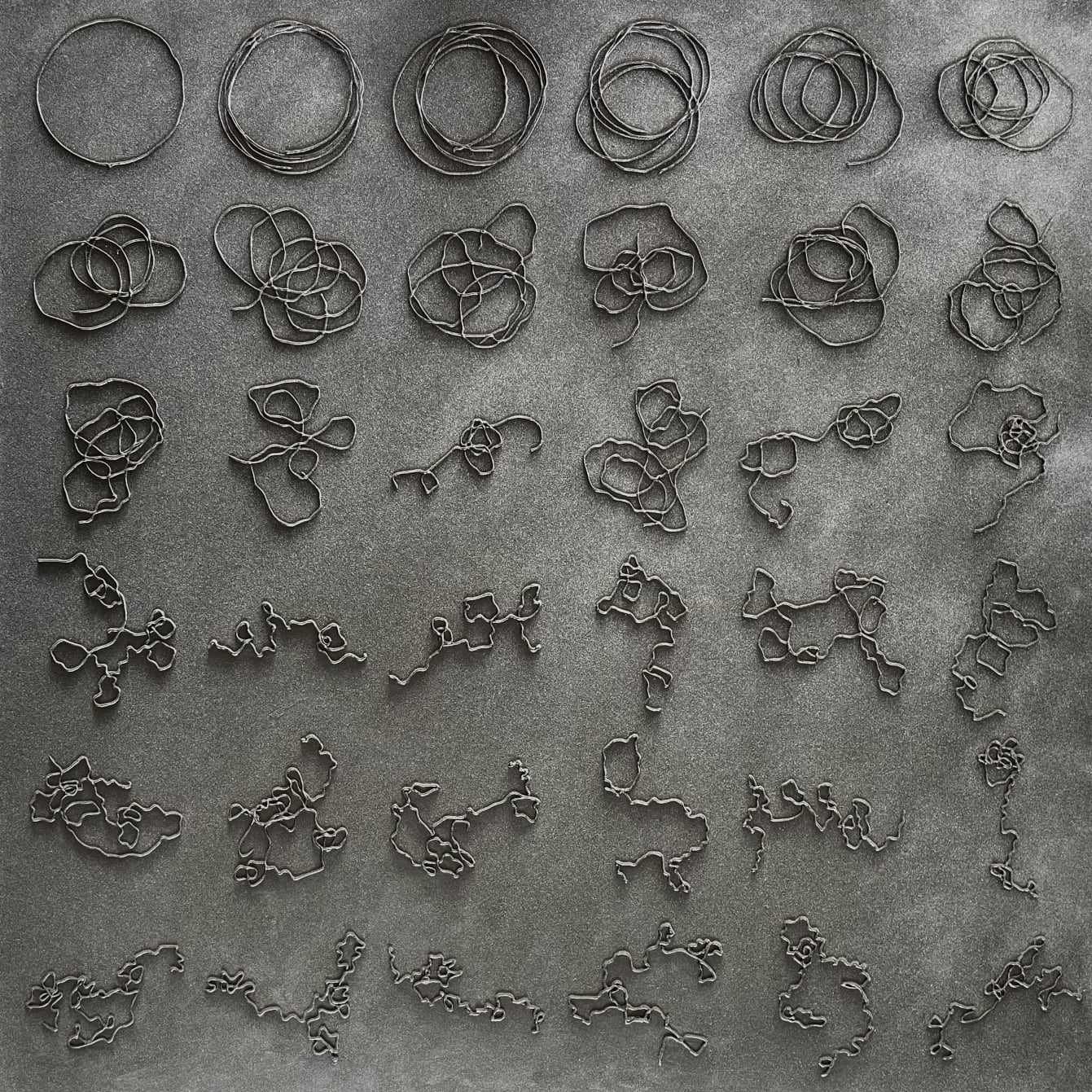
The unfortunate thing about uncertainty is that it expands over time as the number of things you don’t know increases. That’s why it’s easier to forecast the weather for tomorrow than it is for next week. The longer the chain of events, the greater the number of possibilities, and the more difficult it is to choose the right one. Weather systems, financial markets, genetics, ecosystems, and even human behaviours like societal trends, social interactions and the evolution of narratives, all exhibit levels of complexity that make predicting what will happen impossible. Tiny differences in any part at any time can lead to radically different outcomes.
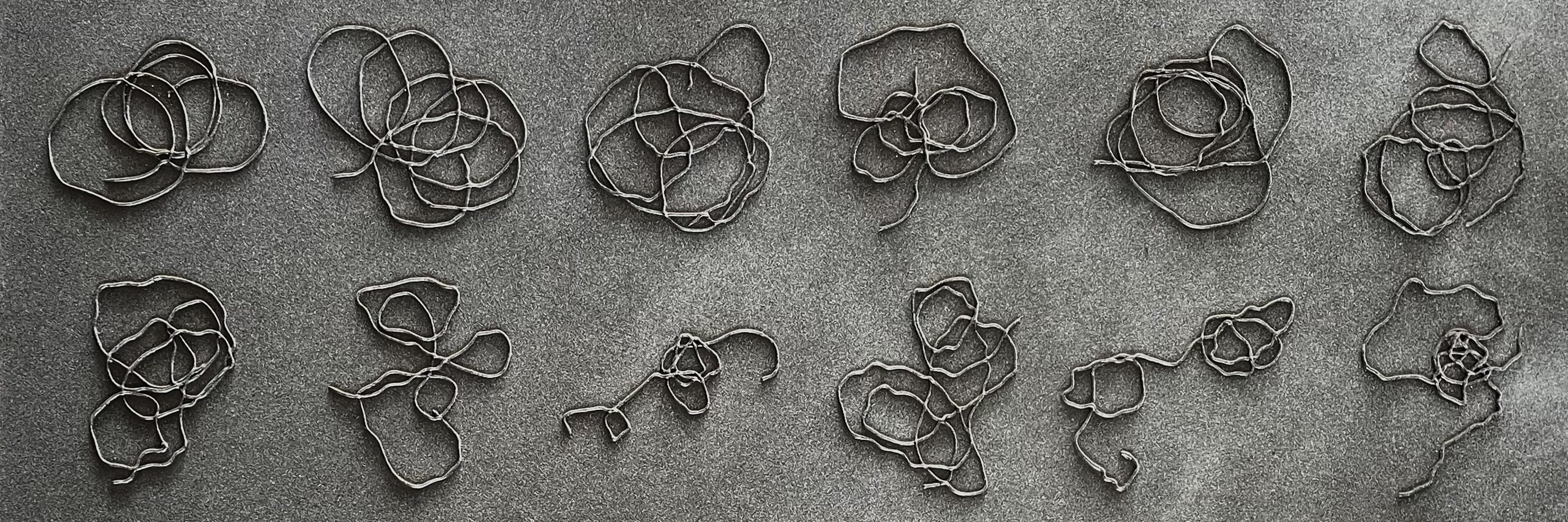
You can imagine the future as a tree. If there was no uncertainty, it would be a single trunk with no branches. If it was entirely random it would be an exploding cloud with no structure. What we normally find is lots of branches that spread and split off in more and more directions, reaching out into infinity. An ever-expanding fan of possibilities.
So what happens as we move forward and the future becomes the present? The fan of possibilities collapses until there is just a single state - what actually happens. The past then becomes a record of that single path, but ultimately even that expands again as the memory of precisely what happened is lost.
Uncertainty is not always negative. As we project forward in time the future becomes more difficult to predict, but it is also less constrained by the past. This allows for creativity, for unexpected outcomes and surprise. Rather than eliminating uncertainty, the challenge is to recognise the opportunities it presents.
Scientific breakthroughs and social progress often emerge precisely because of uncertainty. It is a condition that enables exploration and the willingness to try something without guaranteed results. In a rapidly changing world, resilience - the ability to live with uncertainty - may be one of the most valuable skills.
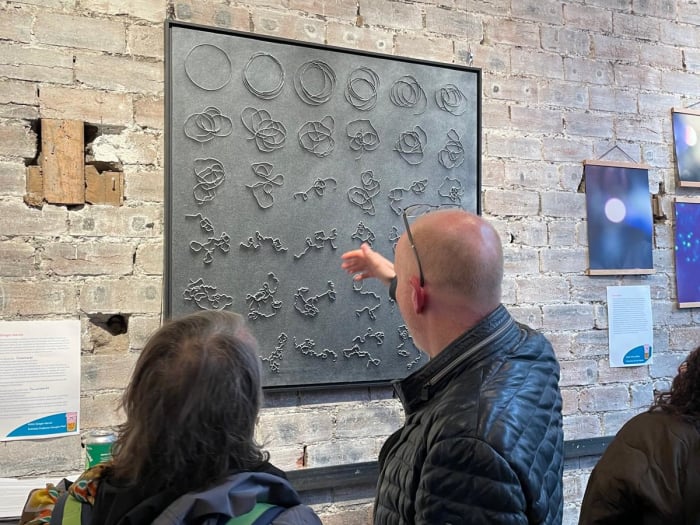
Artists often embrace uncertainty as a fundamental part of their process, allowing chance, ambiguity, and unpredictability to shape the artworks they create. It allows them to break free from habitual routines, discovering new possibilities. The completed artwork becomes not just the final outcome, but also a record of the process, shaped by unpredictability. It transforms uncertainty from a source of fear and discomfort into one of exploration and insight.
What does this say about our capacity for agency? Our ability to do something intentionally; to have a meaningful influence on the outcome.
Uncertainty can give us both more agency and less agency, depending on how you look at it. Uncertainty increases the number of possible actions we can take, but it also reduces our ability to affect the outcome. Our freedom increases, but our control decreases. If the world was totally random our actions would have no reliable effect. Too little uncertainty and our agency disappears but too much and agency becomes meaningless.
Thankfully, the universe is predictable enough for our actions to have consequences, but uncertain enough to make different outcomes possible.
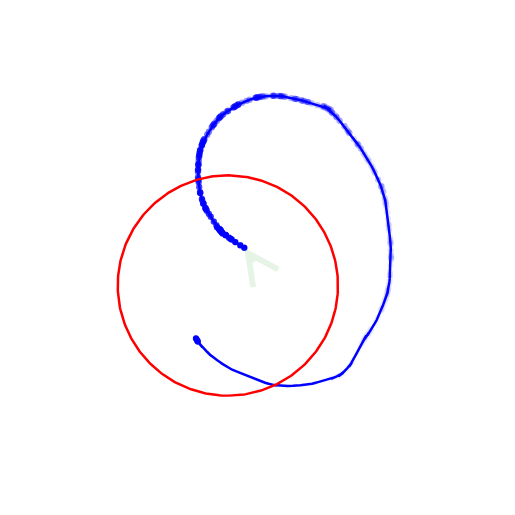
We live in a landscape of potential futures, and we seek clues to help us take the right path. This process of taking the right path, of navigating the future gives a direct insight into uncertainty. Navigation is about projecting yourself into the future and trying to head in the right direction, and it can make us acutely aware of the expansion of uncertainty. Try a simple experiment. Shut your eyes and start walking. You can actually feel your uncertainty growing, and growing rapidly, each step draining your confidence until you are compelled to open your eyes to check where you are.
But what if there’s no way of checking? No information to confirm whether you’re on the right path? Dead reckoning is the traditional practice of plotting a course when there are no reference points to confirm where you are. Maybe you are far out at sea, under heavy cloud and in a deep fog. All you can do is point in the direction you think you need to go and travel the distance you think you need to travel. But like walking with your eyes shut, the tendency to drift off course is immediate and dramatic.
In 1707, Admiral Sir Clowdisley Shovel’s fleet of 5 warships was approaching the south west coast of England after 12 days sailing in fog. A sailor had been secretly estimating their position and approached the Admiral, concerned they were dangerously off course. He was immediately hung for mutiny. 4 of the 5 ships subsequently hit rocks off the Scilly Isles and sank. 2,000 men went into the water and Sir Clowdisley Shovel was one of only two who washed ashore alive. There he was discovered by a local woman who murdered him for his emerald ring.
In 1714, the Longitude Act created a prize of £20,000 (equivalent to £5 million today) for a way of calculating longitudinal position to within sixty eight miles – wildly inaccurate, but a vast improvement on what was possible at the time. Carpenter John Harrison took up the challenge, designing a clock that allowed the calculation of longitude to within about 20 miles – but only if you could see the stars, sun or moon. Navigating by dead reckoning alone, with no sight of sky or land could still cause you to drift off course by up to 300 miles in just a week.
Today, we have GPS signals telling our mobile phones where we are to within a few metres almost all the time. But what if we didn’t? What about submarines that can’t connect to the network, or when we are in tunnels, or inside buildings. What if GPS failed?
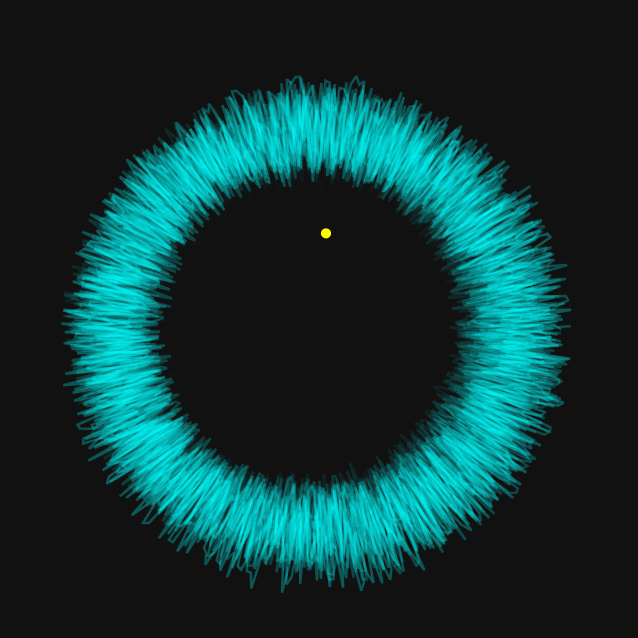
Your phone has gyroscopes and accelerometers built in that help it understand how it’s moving. It knows which way up it is, you can play games by tilting it one way or another, and if you go into a tunnel using satnav it will have a go at predicting where you are. But really this is just a modern version of dead reckoning and is extremely inaccurate, potentially losing its position by hundreds of meters in just a minute – even if it’s sat still on a desk. Tiny errors, those little uncertainties, build up and compound quickly, making predictions utterly useless.
Commercial aircraft have much more expensive inertial navigation systems that can work in the absence of external reference points, but these still have an inaccuracy of around 0.5% of the distance travelled. Military aircraft are better, and high-grade submarines better still. But even they can drift off course by up to a nautical mile a day if they don't have any external references to correct their position, enough to make you want to surface.
Quantum gyroscopes are being developed to reduce this inaccuracy even more. This could allow long‑duration navigation in submarines, aircraft, and autonomous vehicles without surfacing or needing GPS updates.
But ultimately, no matter how accurate your system, if you have no way of checking where you are, those tiny uncertainties will start to build up and eventually the error will become overwhelming.
Uncertainty is inevitable. We just have to live with it, and once in a while open our eyes to check where we are.