Superposition
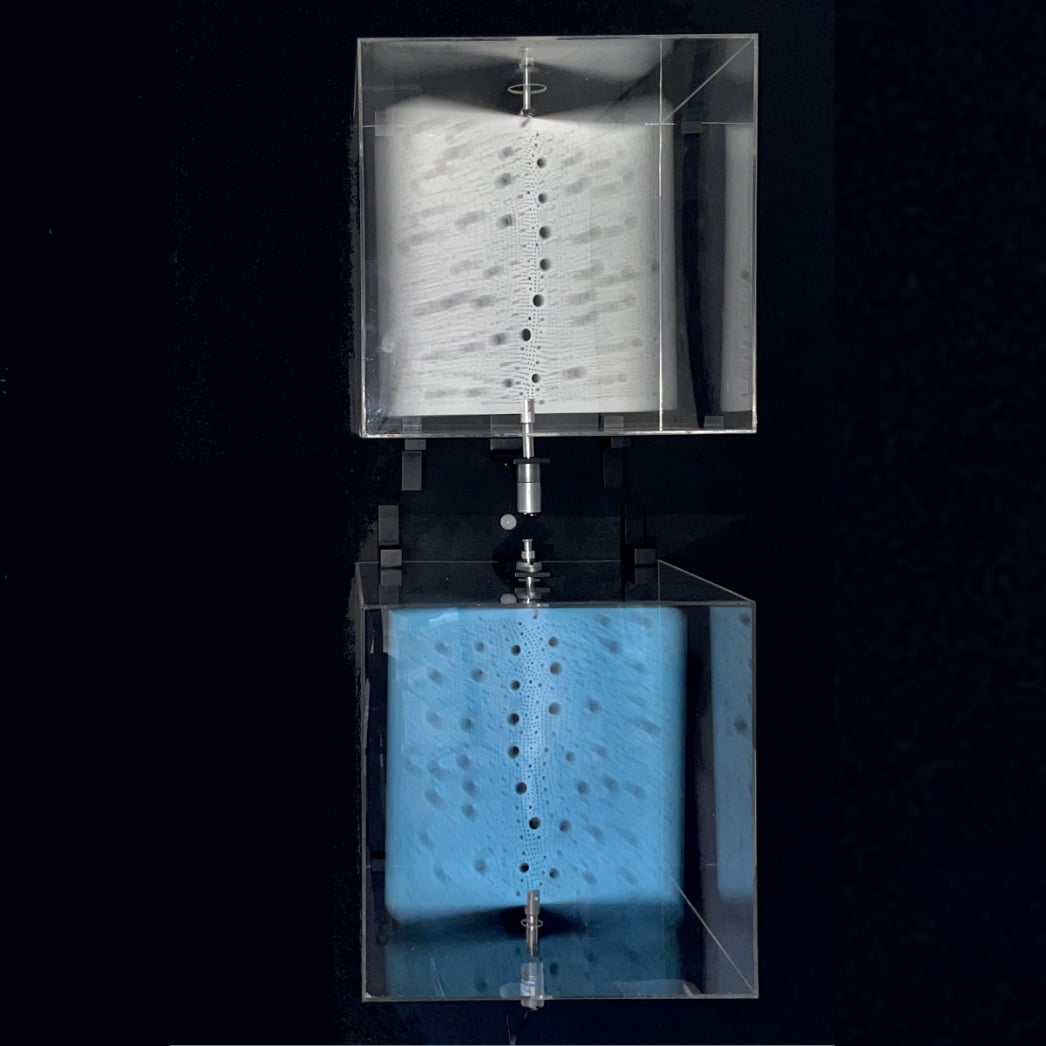
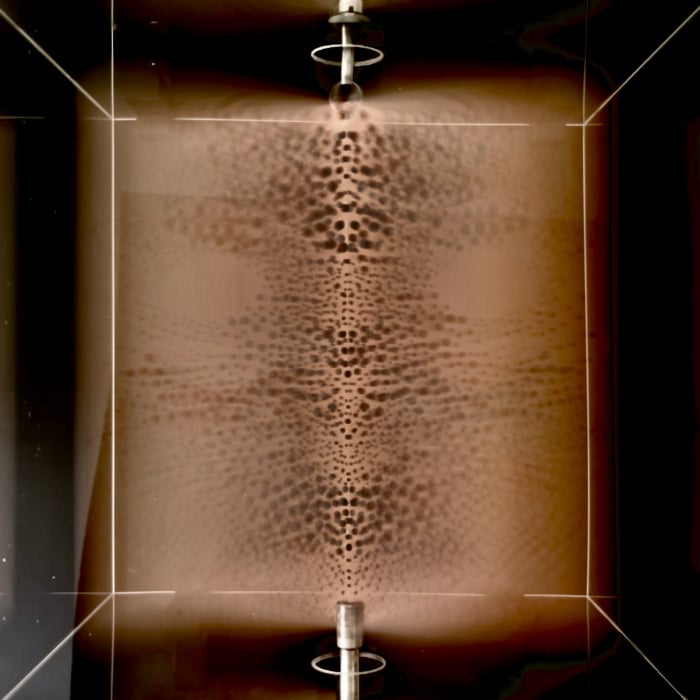
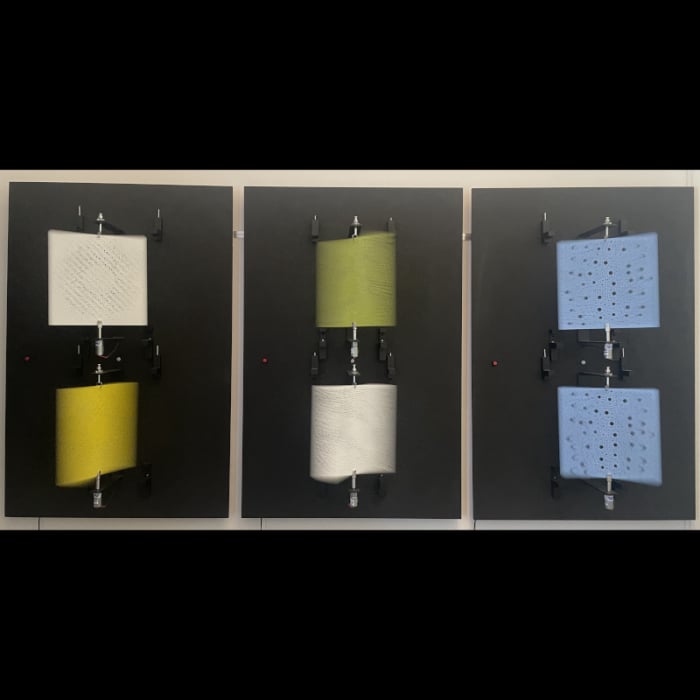
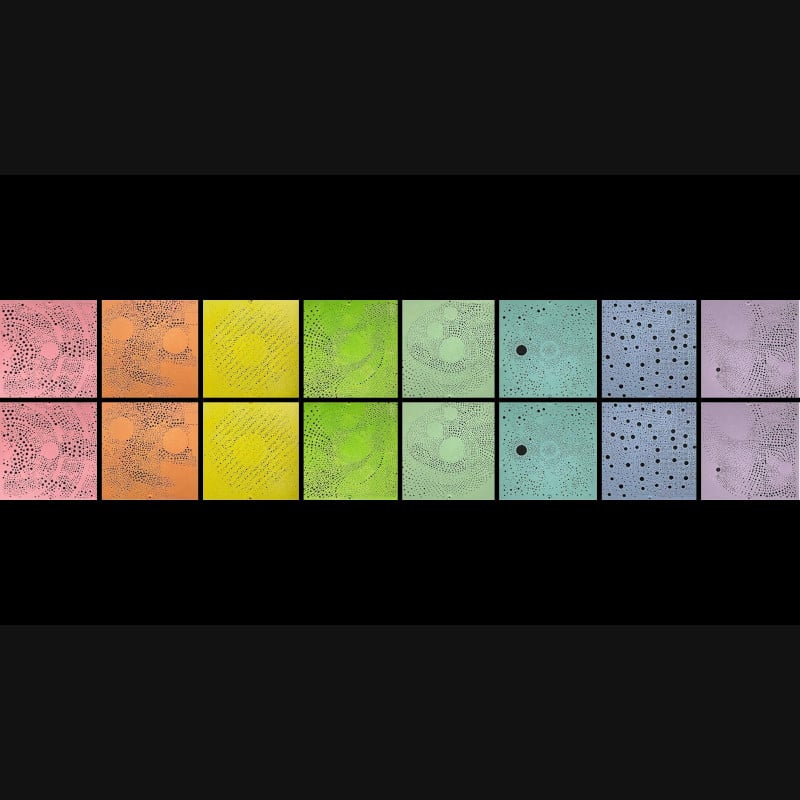
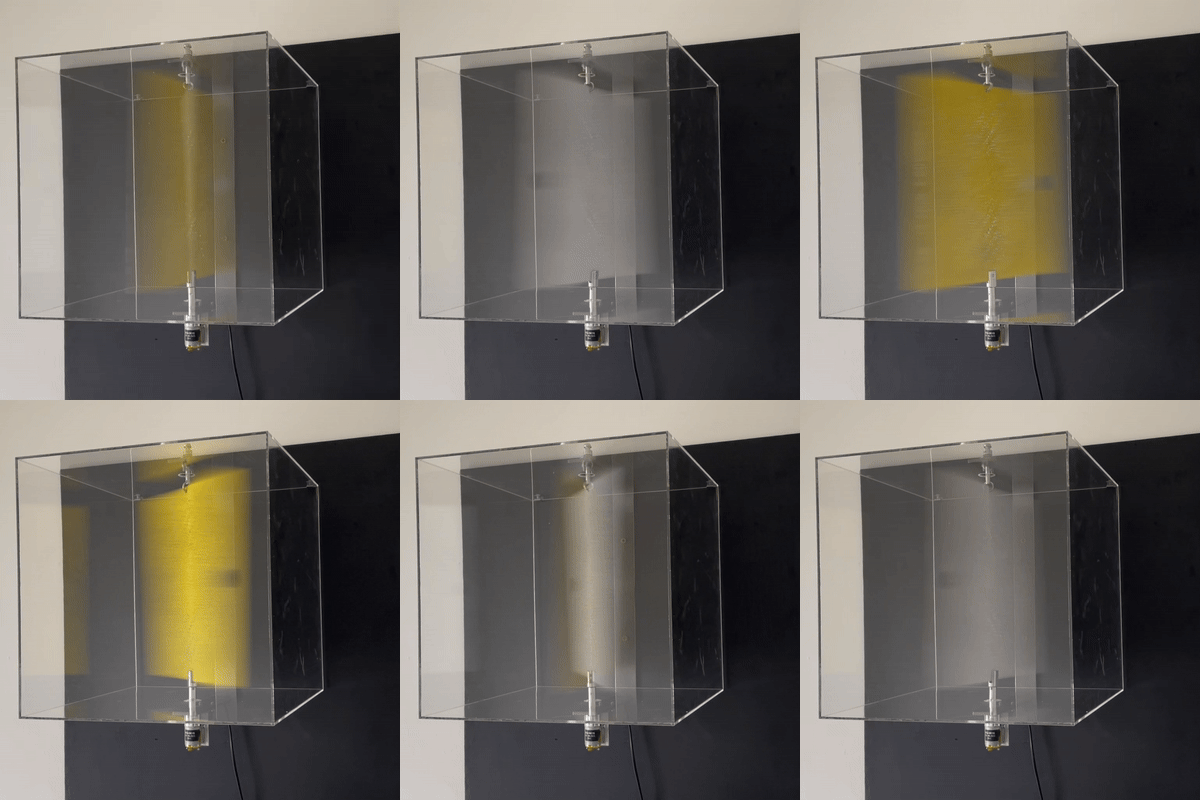
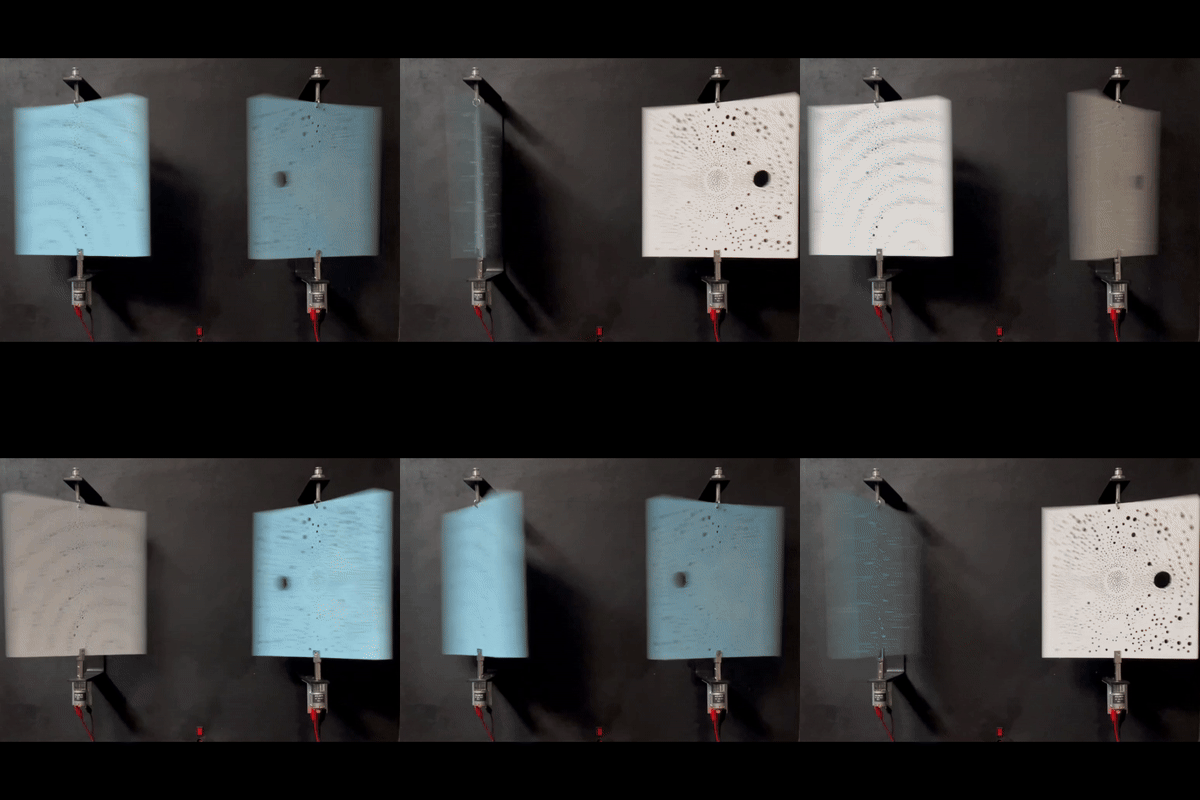
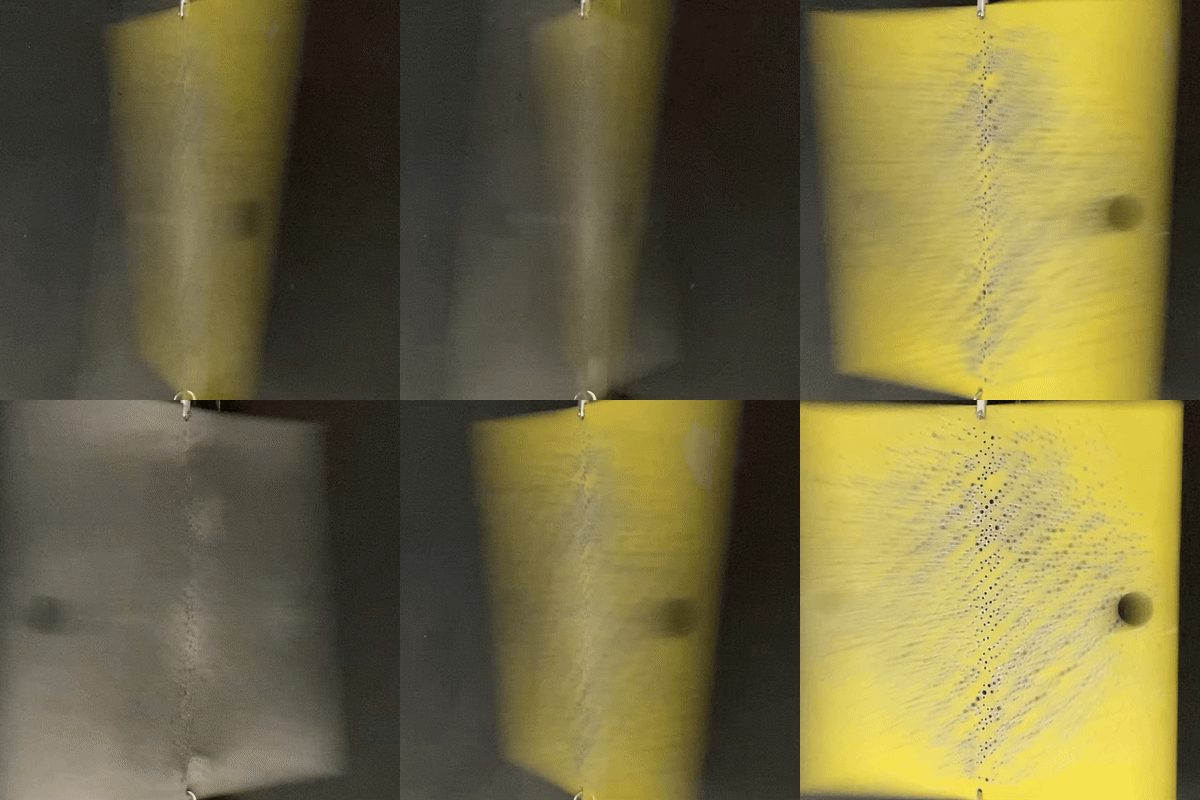
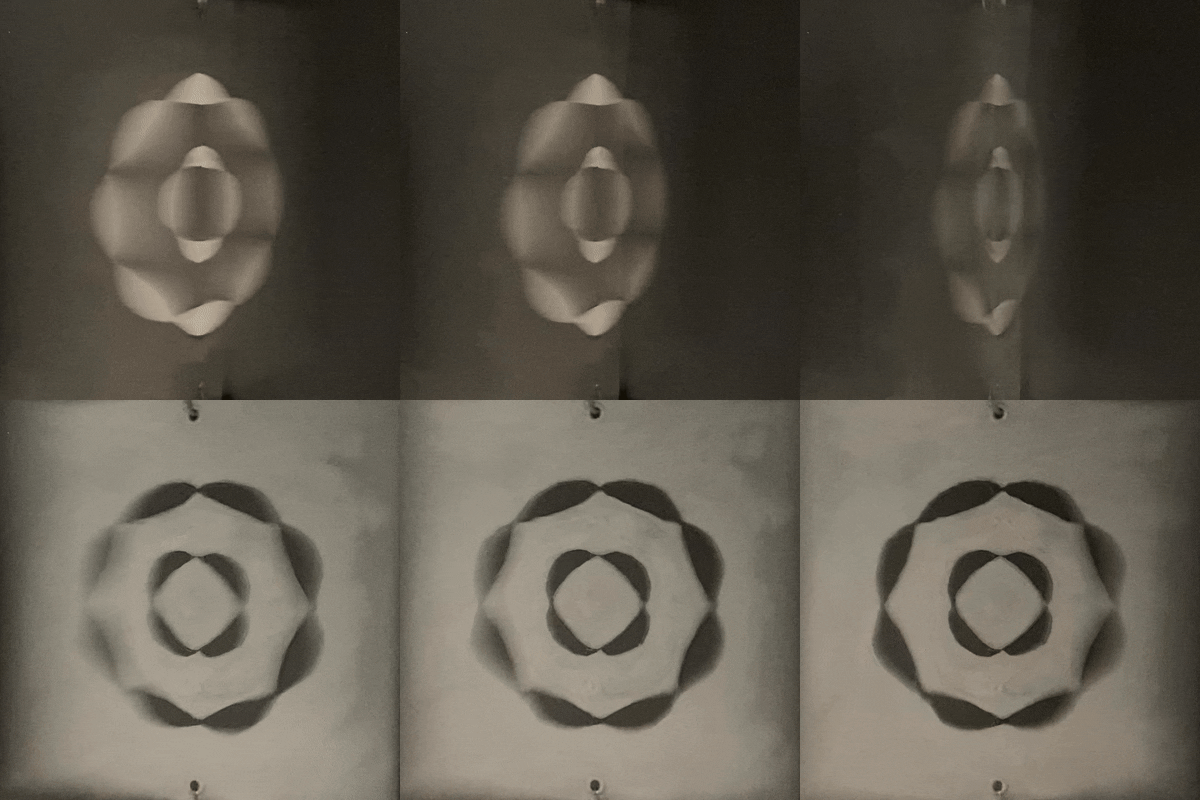
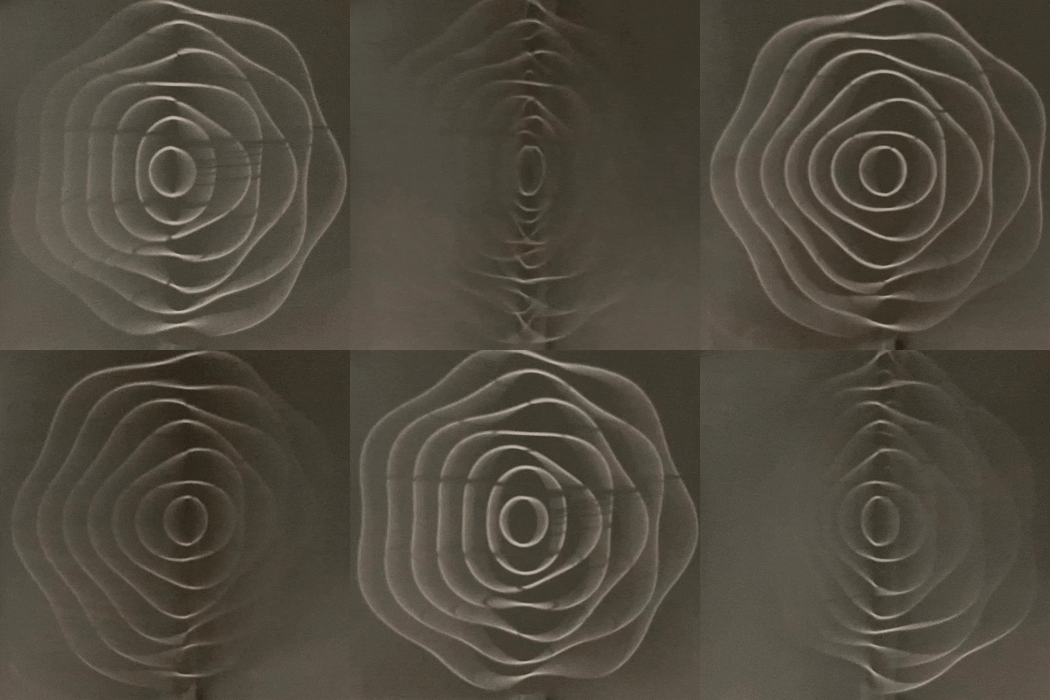
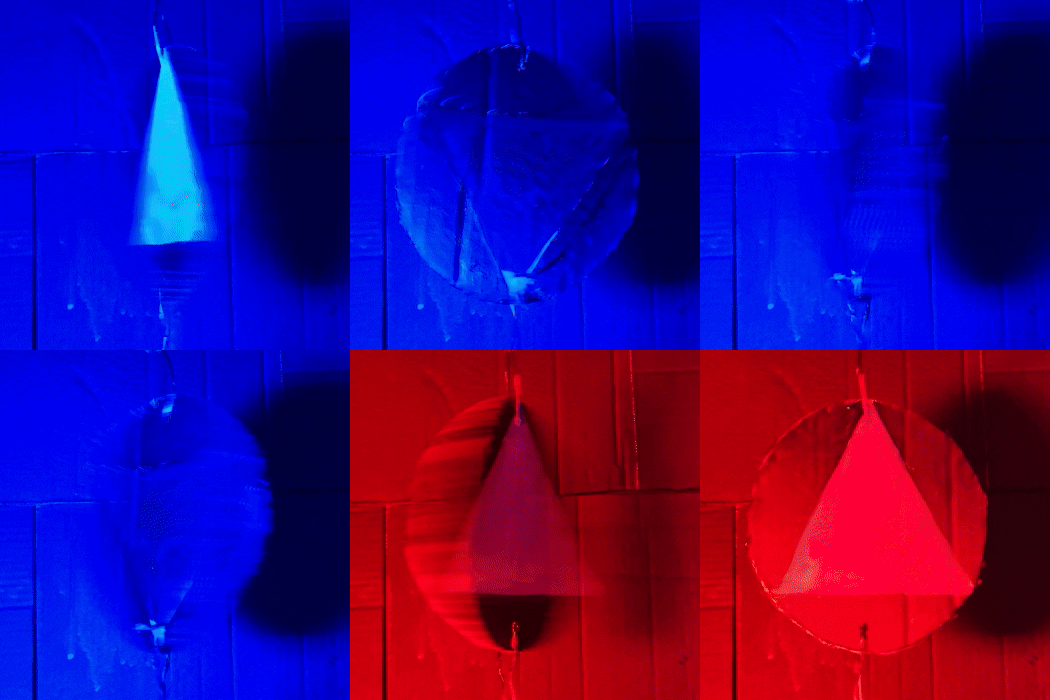
Sixteen artworks spin at 400 revolutions per minute. Thousands of holes cut through sheets of aluminium appear to tunnel through space, transforming flat surfaces into shifting, three-dimensional forms.
For a moment, the artworks seem to become something that shouldn't exist, then they stop. Their forms collapse back into sheets of metal, the illusion disappears.
But one thing remains unexplained. Each artwork has an identical twin. When they stop spinning, most of the twins behave exactly as chance would predict, they show the same side half the time and opposite sides half the time. But one pair doesn't. They show the same side three quarters of the time. Why? How do the twins know what the other is doing?
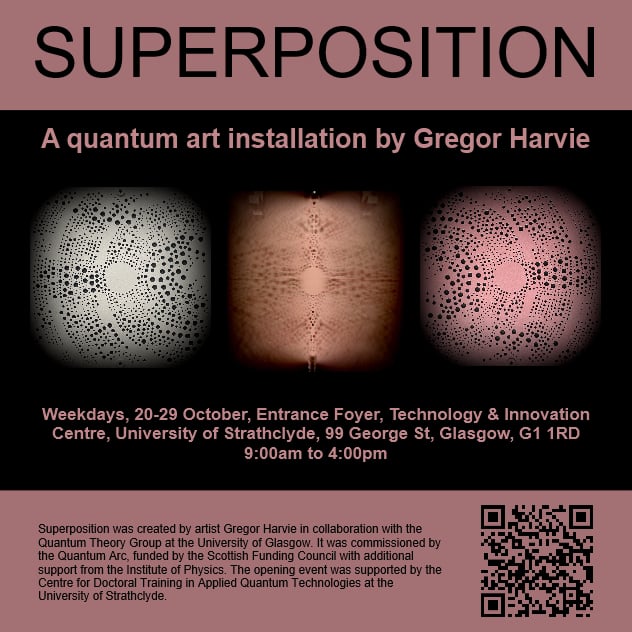
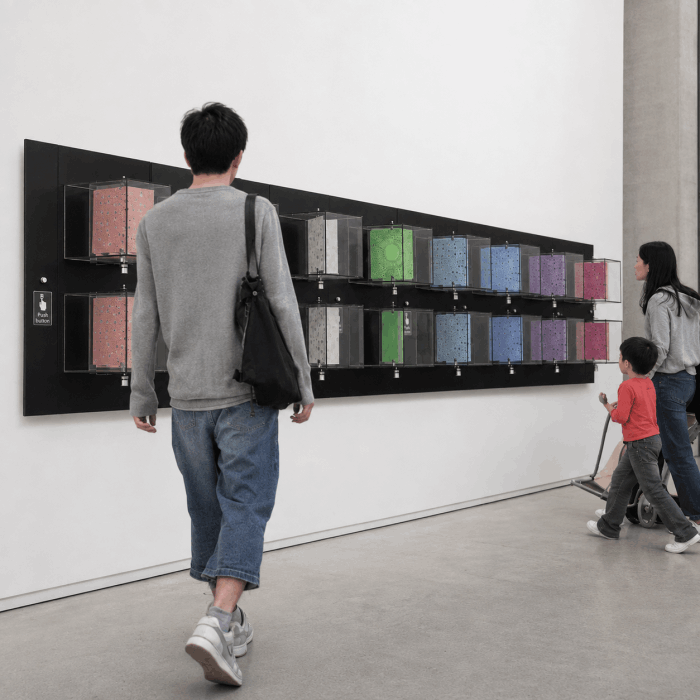
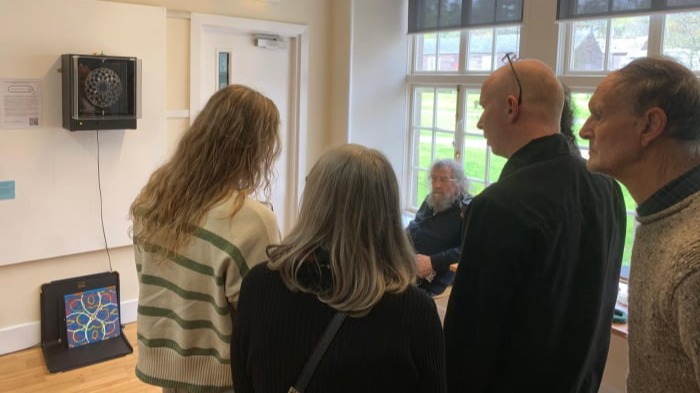
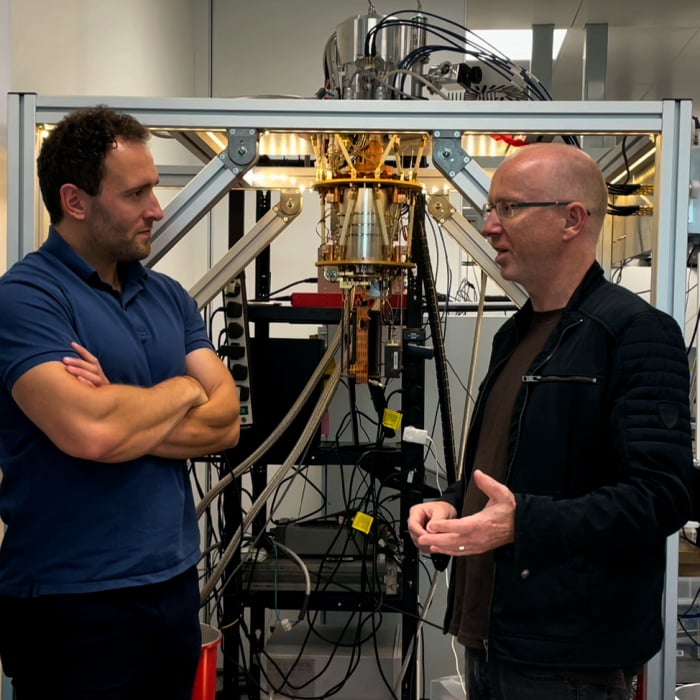
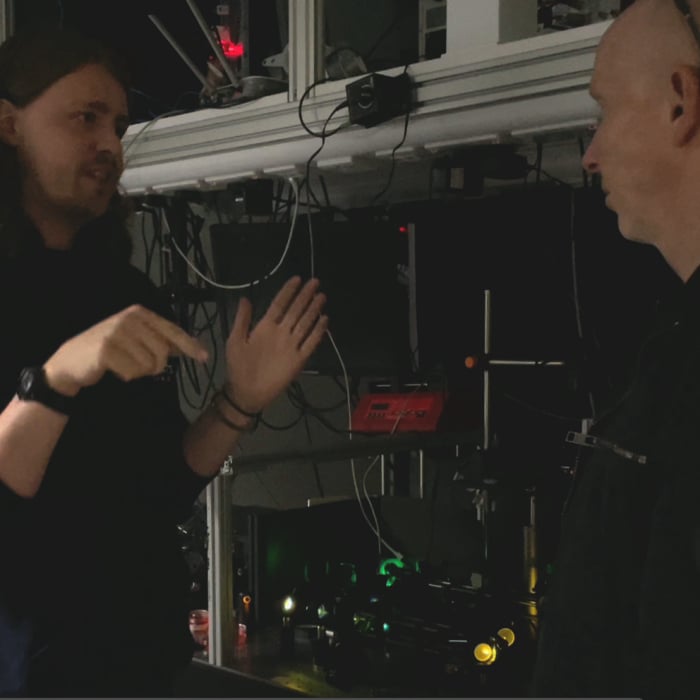
This is Superposition, an extraordinary new installation by Scottish artist Gregor Harvie, created in collaboration with the Quantum Theory Group at the University of Glasgow. In a groundbreaking fusion of art, physics and philosophy, the work transforms some of the strangest ideas in quantum physics into something that can be experienced and explored.
The installation marks the centenary of the Schrödinger equation. It was funded by the Quantum Arc supported by the Scottish Funding Council, with additional funding from the Institute of Physics. The opening event is supported by the Centre for Doctoral Training in Applied Quantum Technologies at the University of Strathclyde.
You can see the Superposition art installation on weekdays, 20-29 October, in the entrance foyer at the Technology & Innovation Centre, University of Strathclyde, 99 George St, Glasgow, G1 1RD. 9:00am to 4:00pm
Like maths, the equations of physics are balances, one side must equal the other, and being equal, if you subtract one side from the other you are left with nothing.
This idea of nothingness repeats throughout physics; a universe that came from nothing and will go back to it, the annihilation of matter and anti-matter, the continual reduction of our world into massless, dimensionless packets of energy, the implication that ultimately, there is nothing there.
The particles that form our universe take up only 2.8 x 10^-44% of its volume. That’s 0.0 then another forty two 0s 28%. In other words, the universe is almost entirely space.
Artists are also keenly aware of this idea of nothingness; a metaphor for the human condition and the void at the heart of existence - the meaninglessness of life. But it also represents a state of potential, a space for contemplation, for mindfulness, being at one with the universe. Far from empty, it is full of meaning, of possibility and presence.
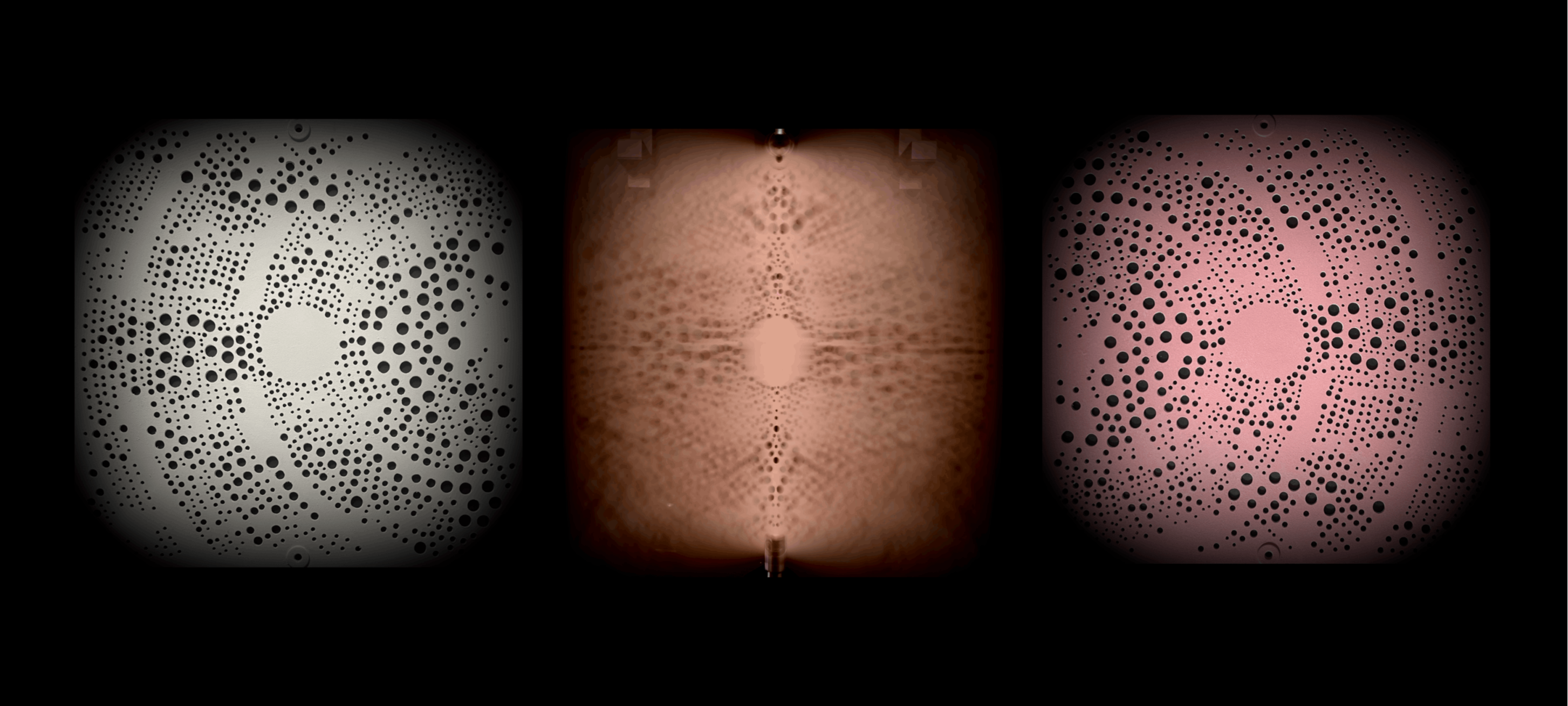
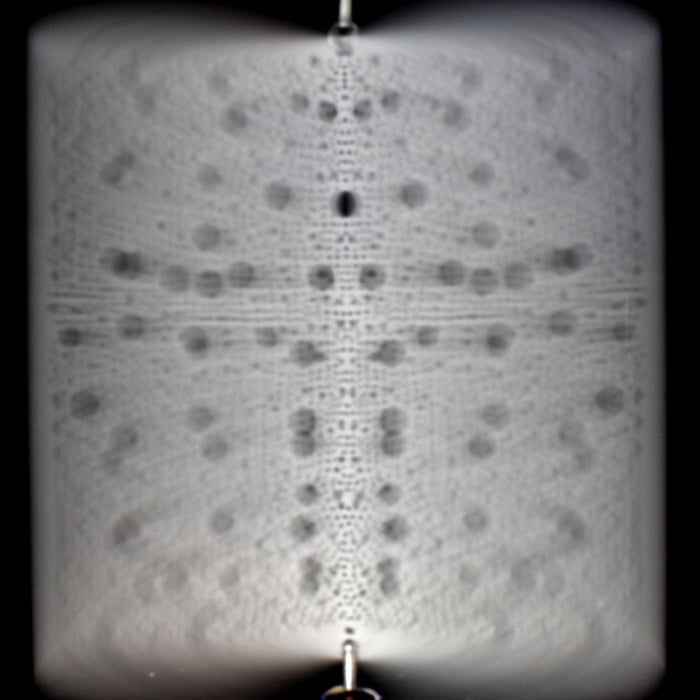
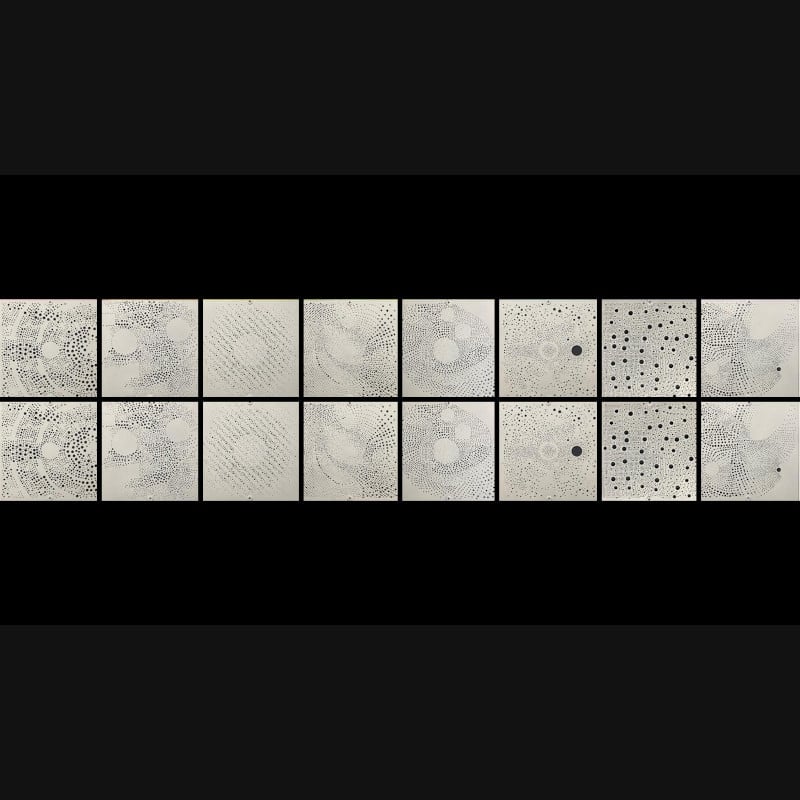
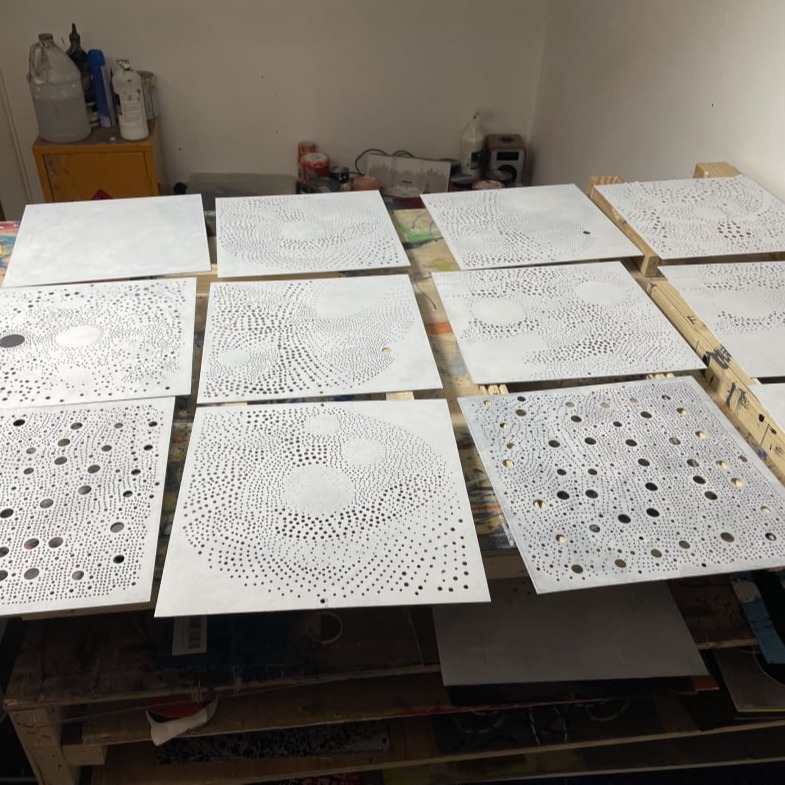
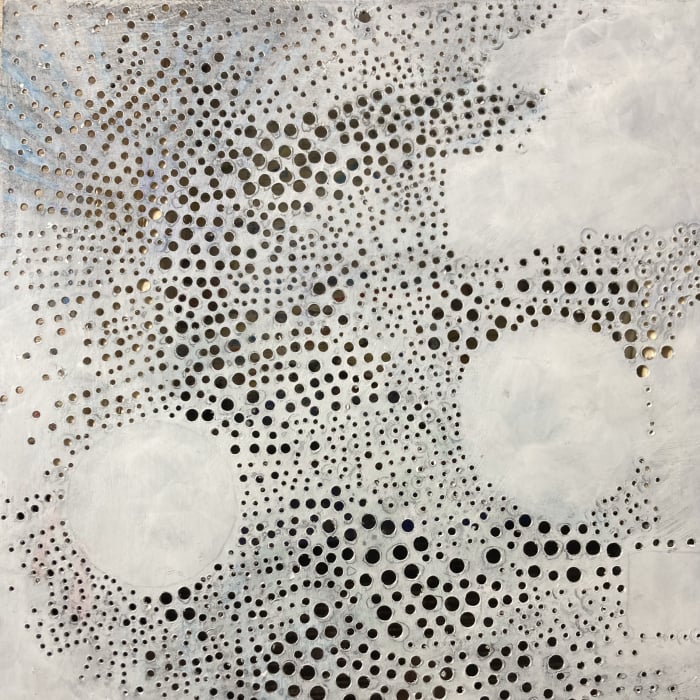
Nothingness is embodied in the Superposition installation by holes. Thousands of holes, meticulously cut through thin sheets of aluminium, reducing the world to tiny packets of negative space. They are both precise and elusive, each hole a discrete event, but combining to reveal recognisable features; lines, waves and circles; constellations of voids; a duality of one-dimensional, singular points and two-dimensional flowing forms.
They have a materiality, a physicality that is real and present. A series of ruptures, punctures, punctuations that break through traditional notions of the painted surface, of front and back. Instead inviting us to look through, to consider what lies beyond, introducing the third dimension of depth.
The two sides, apparently different, are actually mirror images, inversions, handed views of the same pattern, each side an echo of the other. But when the panels start to spin, everything changes. The holes tunnel through space, extruding circular paths that introduce the fourth dimension of time. Spinning at speed, the two faces merge to conjure symmetry where previously there was opposition; a superposition of art that is not one side or the other, but both at once.
In this dynamic state, there is a confusion of forms, some discrete and localised with definite positions, others spreading, overlapping, leaping from one position to another, moving as if alive, jumping between states, leaving ghosts of forms lingering in the mind’s eye like the flickering of an old movie.
This is not just an object, but an experience of being. The viewer is witness not to a fixed image, but to an evolving event, where perception becomes entangled with the artwork's behaviour. It’s your mind that makes the image, the form. It only exists through your act of observation. The object itself is unchanged.
When the spinning stops, the patterns separate again into front and back, left and right, their symmetry broken. The art is just space again – there is nothing there.
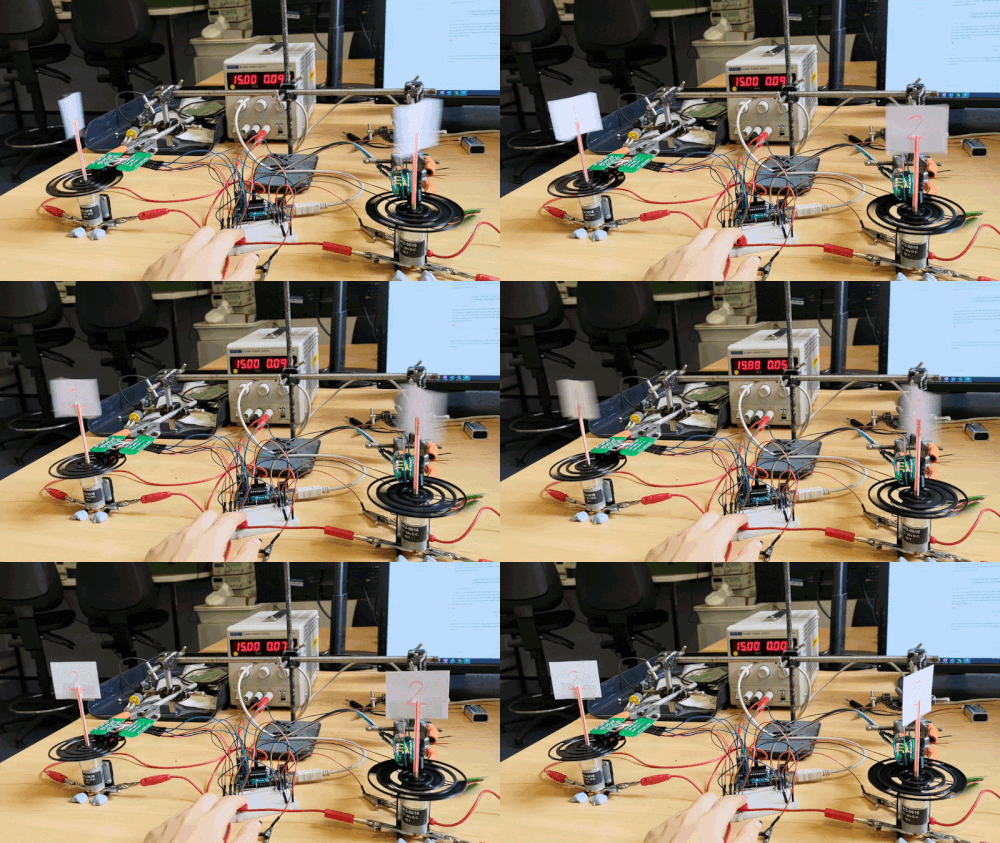
But here’s the trick. Each panel has an identical twin, and the twins should follow the 50/50 rule of heads or tails. Half the time the twins should show the same side when they stop and half the time the opposite side. But one pair resists this logic and instead show the same side three quarters of the time. There must be a connection between them, like identical twins who instinctively know how the other feels.
This counterintuitive behaviour is a recreation of the strange and beautiful mechanics that underpin the fabric of existence and that were proven by the revolutionary "Bell inequality". Physicist John Bell identified an inequality - a statistical anomaly - that could only exist if the weird mathematical predictions of quantum physics were an accurate description of reality; if particles actually did behave in the 'spooky' ways Einstein could not bring himself to believe. Experiments later found this inequality in quantum systems - pairs of particles could be 'entangled' and their behaviour would then co-ordinate, no matter how far apart they were. This was impossible in classical physics, it could only exist in a quantum world.
The implications and impacts of this extraordinary experiment are still emerging. It has shattered our classical understanding of realism, of fundamental ideas like cause and effect. It has transformed our understanding of our place in the universe and paved the way for revolutionary technologies that will change our capabilities for ever.